Posts

Showing posts with the label insect deterrent

New Garden Pest: Beet Leafminers

Image
This spring has brought us a few new insect problems. In addition to the usual cutworm issues  in beds where things were wintered over and very minor winter moth problems , we’ve got some new bugs as well. The potato beetles have pretty well ruined one potato bed and ignored another — in the latter, the ladybugs seem to be prevailing .  Our other insect infestation this spring is affecting our beets: This is one example of a scorched-looking leaf. We’ve seen these in our beets, spinach, and Swiss chard this spring, and at first we assumed that the sun had burned them out on our first hot day a few weeks ago, since the issues seemed to coincide. But there were also other leafy greens in the same bed that were unaffected, and once we realized that the problem was only with plants in the same family, we figured it was either a disease or an insect issue. A closer look makes it fairly obvious that bugs are the problem:   I’m not sure what gardeners di...
Battle Royale: Potato Beetles vs. Lady Bugs

Image
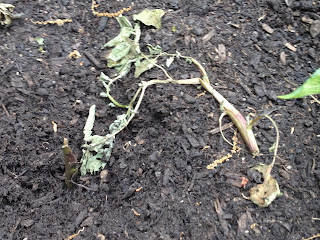
Something’s eating our potato plants: At first Kirk assumed it was cutworms because the stems looked sheared off, but we also have a whole bunch of these guys: That’s a pair of Colorado potato beetles , working pretty frantically to make lots more little potato beetles.  These bugs are notoriously destructive, and we’re losing potato plants by the day: I’m not sure if they’ll sprout again or not, but even if they do, I doubt we’ll have much of a yield by fall, especially given our short growing season. These are our red and white potatoes, but our blue ones are in a different bed — one that so far seems to be in the clear. This weekend we’ll add some row covers to the blue potato bed to try to keep it that way. We suspect that these potato beetles rode in on a load of compost from the city yard. This is ordinarily an excellent resource, but we’ve never had a problem before, and we were fine right up until adding city compost to hill up these plants....

Please Don't Eat the Roses

Image
While soaking up the sunshine and giving the perennial border a once-over (weeding, deadheading, general inspecting) this weekend, I noticed a pretty serious problem with the White-Out roses there: Not certain you see see the problem? Compare to this photo taken just two weeks ago: So where there used to be two big, full, green  rose bushes, we now have two crispy brown ones. (Although if I'm being honest, that photo above isn't without some warning signs that I failed to notice. The brown you can see easily are actually pretty harmless dried rose hips from the previous season, but when I zoomed in on my the file in iPhoto, I could see the beginnings of spotting on the good leaves.) Anyway, here's a closer look at the damage, which is extensive: The leaves look lacy and brown, crispy and dry. But with all the rain and cool temps we've had this spring, that didn't make much sense.  Some internet research brought me to the Missouri Bot...

Of Cabbages and Cutworms

Image
Although we were very good about fencing the cabbages this year to protect them from hungry skunks and groundhogs, it turns out something else has been eating away at them: See the way those leaves are clipped off right at the bottom? At first I wasn't sure what was going on, because of the insect damage further up the leaf, but that nibbling at the bottom is a classic sign of cutworms. We have dealt with them before , and there's just nothing more disheartening than watching your tiny transplants (especially ones you raised from seed over the winter) get mowed down overnight.  Half of our winter cabbages were beyond saving:  As you can see, I suspected cutworms earlier, and used a yogurt cup with the bottom cut out as a ring around it to keep the worms at bay. That was too little, too late for this plant, though. Time to try a more drastic remedy before we lose all of the cabbages. First, we dug up our remaining plants and temporarily moved them to an un...

Houston, We Have a Salad

Image
After a lovely day at the beach on Plum Island, I went out to weed and thin our first plantings . Guess what? There were enough leaves from the seedlings I had to pull out for an honest-to-God salad! Here's what I saved from the thinning: On the left is lettuce; on the right is bok choy. That's kind of a weird salad ingredient, but it was small and tender. There's more: On the left is arugula; on the right is beet greens (with the red stems) and turnip greens (with white/purple stems). We decided to mix it all together for a micro-green salad for dinner. Kirk topped the salad with the world's easiest dressing: lemon zest, lemon juice, salt, pepper, and olive oil. No mixing or measuring — just squeeze or sprinkle or drizzle on and toss.  It's really light and fresh, and perfect when your veggies already taste good. The finished product: This was delicious and satisfying … right up until I noticed part of it was crawling around my plate. Even though ...