Posts

Showing posts with the label strawberries

2017 Master Plan: The Patio Quadrant
Image
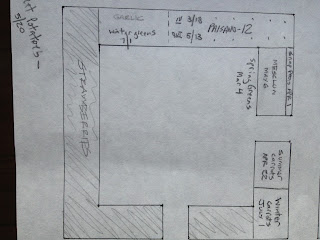
The final planting quadrant is also the smallest, because it lacks the center C that the others have in favor of a patio area for picnicking. It also has a full bed of strawberries along with existing perennial plantings of roses, rhubarb and lavender, so there aren’t many areas left to fill. Across the top row is garlic that was planted back in October. When this is harvested in July, it will be replanted with winter green like arugula, bok choy and turnips. The remaining section has Paisano paste tomatoes.  Along the right side is a short trellis of snap peas, which will shade a patch of mesclun and other spring greens. Right now this is the site of our winter cold frame of mache and spinach, so our plan is simply to interplant the mesclun with these plants in early spring and gradually remove and replace things they bolt throughout the season. There are also both winter and summer carrots close to the house, where they can handle the shade that creeps in during th...

Strawberry Season Is in Full Swing!

Image
The thing about gardening is that you never know what to expect from one year to the next. It’s just about impossible to have every crop do well at the same time, but the flip side is that, no matter how bad some things look, something is bound to go like gangbusters. It balances out. This year, though we’ve been struggling with our tomatoes and potatoes , the strawberries are looking better than they ever have before: A quick correction: the established  strawberries are looking better than ever. Those are the lush plants in the distance. The foreground is full of our newest strawberry plants, which haven’t taken off quite like we wished — at least not yet. Anyway, the plantings from the three previous years are doing amazingly well this season and promise to bear big crops: That’s a lot of strawberries just waiting to ripen. Since taking that photo we have put up our chicken wire fencing and covered the top with bird netting to protect the fruit. That ...

2016 Master Plan: The Patio Quadrant

Image
We’re a little behind the eight ball this year on the garden planning. Usually we start a new plot of all the vegetable beds on New Year’s Day (or very shortly thereafter). This year we only just got around to this, so we’re about three weeks behind schedule. Though that doesn’t seem like a big deal (we’re nowhere near planting seeds outdoors, after all), it puts us behind on ordering the seeds we need to start. Still, it’s hard to get too  worked up about it when the wind chill outside is just 10 degrees. Anyway, we finally did get our act together and lay out the plans, so here is the patio quadrant plan for the spring: On the left-hand side there is a long row of strawberries. Though we considered moving the strawberries to the other small fruit beds to replace our struggling cranberries , we ended up keeping them right here, where there’s much more room to devote to a crop that has been quite successful for us over the years. Provided everything survives the wint...

One Last Summer Harvest

Image
We often don’t have a killing frost here the first couple times it’s predicted, protected as we are by the ocean, which acts as a big heat source and keeps our temperatures slightly warmer in the winter and cooler in the summer. In the game of protecting tender plants, those few degrees in either direction are crucial. This year, though, there was no flirting with 33 degree nights. The temperature dropped right down to 30 last night, and that did in the last of the summer fruits. We prepared to protect our leafy greens , and yesterday I also went through the garden to pick anything that looked big enough to be worth saving:  As a general rule of thumb, fruits will not survive a frost, but root vegetables will be just fine until a hard freeze, thanks to the insulating power of the earth. Leafy vegetables are a toss up: Basil gave up long ago and green beans are out, but arugula, cabbage, and kale are fine. Broccoli is also usually pretty tough, but we were planning on ...

Summer Strawberry Shortcake

Image
Summer tends to make us pretty lazy in the cooking department. When we're enjoying really great ingredients from the garden, we don't have to do much to them to make them taste good, so there's just a lot of lightly steamed vegetables, refrigerators pickles, and some easy stir fry and curry dishes. You don't have to think about recipes so much as just pick some things and eat them. Today, though, I have a real recipe, with actual measurements and everything. Though our first round of raspberries has just ended, our second round of strawberries has just begun, in a stroke of truly excellent timing. We have several varieties of strawberries, but Seascape is definitely my favorite: These are an everbearing variety, so instead of giving us just one big flush of berries in June, they give a small batch early and then have a second bloom that provides a steady supply of berries from August through early September. The second round is even better, because the...

The Eating Season

Image
Despite everything that has made this spring kind of sucky, we have managed, as we somehow always to do, to have food. The rains came, the sun shone, and we are finally in the eating season. Do they give prizes for broccoli? This might be the best head ever. Now we just need to find time to cut it and eat it (or freeze it ) before it blows open in the heat. Timing is everything. The peas are filling out their pods, and are super sweet. We've managed to stay on top of picking them for freezing, but I'm hoping to enjoy some fresh as well. Our snap peas are doing really well this year. These are a variety called "Shiraz," which we like because it's so easy to see them among the vines for harvesting. They aren't quite as sweet as green ones, but when you eat them young, they're great. We had trouble getting the lettuces started, but now we have a bed of really beautiful butter crunch and romaine heads. Almost too pretty to eat! ...

Soil Testing

Image
Last weekend when we planted our potatoes , we decided that we would expand our potato plot into the strawberry bed, which we made room for by emptying a very sad cranberry bed of its pathetic plants: To make sure that we wouldn't just be killing strawberries in that bed the way we killed those cranberries, we grabbed a soil test kit at our local feed store (yes, that's a thing ): In all our years of gardening, we've never once bothered with a soil test. I guess we've just gotten lucky with good soil, and all our compost use paid off. So this was fun.  You fill up to the first line of the plastic test tube with soil from a depth of 4 inches. Then you empty that little capsule of powder into the tube. Add water, shake it up, and let it settle: Then you compare the color of the water to the chart on the package. This is very alkaline, which explains why the cranberries never thrived. They need really acidic soil, so they were never able t...

A New Potato Hilling System

Image
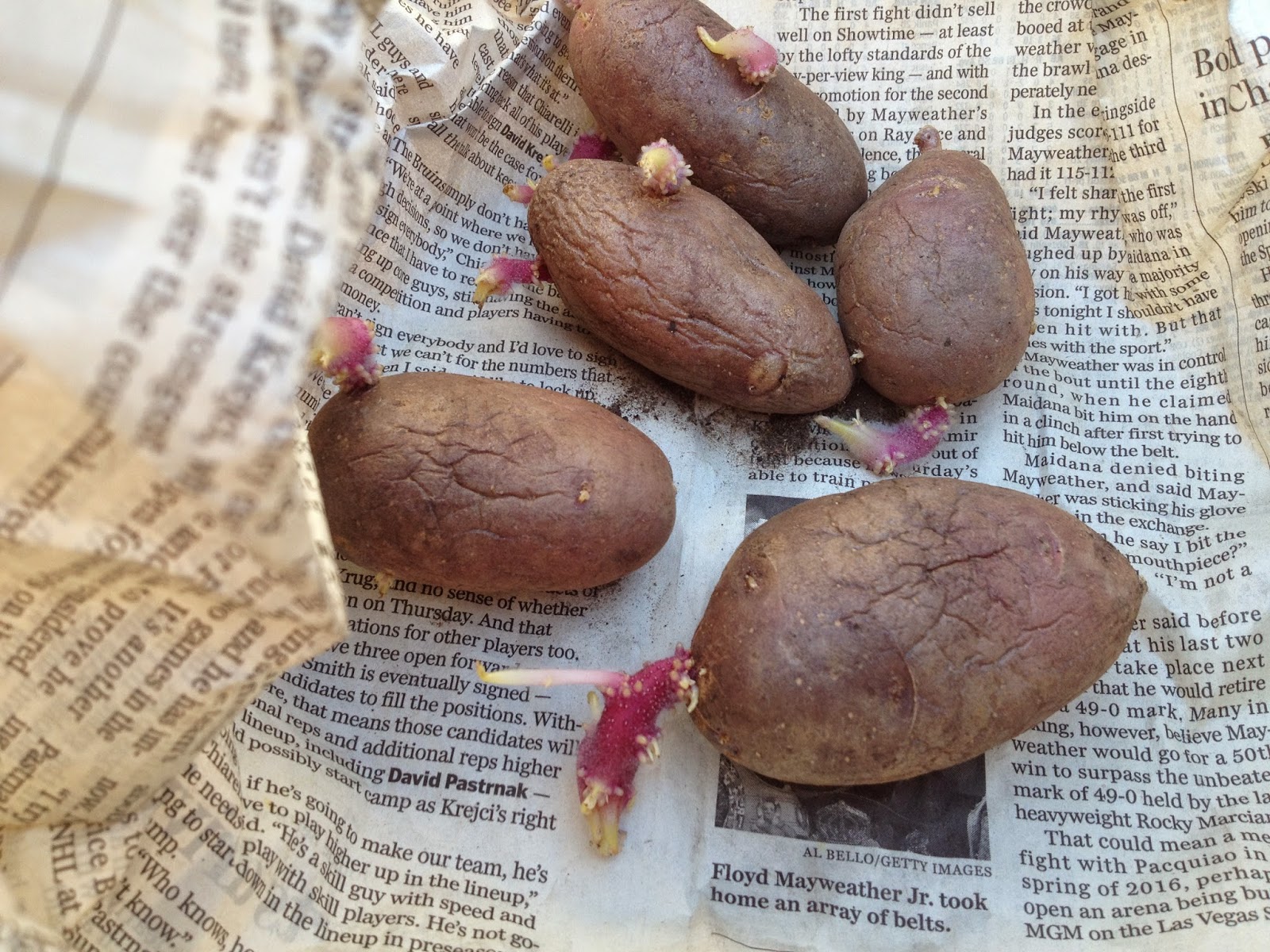
Our seed potatoes arrived from Johnny's on Friday — just in time to plant them this weekend. We are planting Kennebecs and Adirondak Reds that we bought, plus our own purple seed potatoes that we saved from last year's harvest: This year we decided to try something new for hilling up the potatoes. In the past we used 2-foot square potato boxes that we gradually built the sides up on as we hilled up the plants. This was never all that successful. The idea is that the plants should keep producing tubers up their stems and they are covered, but we never really got many potatoes above the original soil line. So this year, we'll being hilling the plants in a more traditional way by just heaping some extra compost around each one. To keep the extra dirt from spilling into the paths, we used parts from the old potato boxes to build a wooden wall: We also have way more seed potatoes than we could fit in that space, so we decide to add an extra potato bed whe...

It's Fancy Jam Time

Image
We're in the nineties, Mother. It's fancy jam time. ~Albert Brooks, Mother This week was all about the jam-making. In addition to our first shot at grape jelly , we also made our first strawberry jam. Back in the spring (when most strawberries are coming in), I ended up freezing all the strawberries that we didn't eat, and figured I would eventually get around to making them into jam. And since I was already elbow-deep in the grape jam process, I threw another pot on the stove and got started on the strawberries on the same day. Once again, I was looking to make this jam with as little sugar as possible, so that all the great strawberry flavor could shine through. To do this, I simplified  Melissa K. Norris' recipe  which, like the adjustments I made to the grape jam, used more lemon (for acid and pectin) and less sugar to achieve the jelling the jam needs to set up. Here's how I made it: 1. Gather the ingredients: 3 lemons, 8 cups of whole strawber...

Kids' Corner: Strawberry Fool

Image
We've been enjoying our bonus round of late summer strawberries for the past couple weeks. We have two day-neutral varieties — Tribute and Seascape — that have a re-bloom in August. These berries ripen continuously until about mid-September, when we start to lose the light and heat required to get them nice and red.  Tiegan has been leafing through Hugh Fearnley-Whittingstall's  The River Cottage Family Cookbook  a lot lately, and over the weekend she up and made a dessert recipe all on her own. She told me later that she changed the recipe as she went, because she didn't think it needed as much sugar — a smart chef knows the quality of her ingredients! Below she explains her adaptation of the River Cottage recipe for Strawberry Fool. Strawberry Fool Here's my recipe: 1 cup of pureed strawberries 1 cup of heavy cream 1 tablespoon of powdered sugar I whipped the heavy cream and folded in the pureed strawberries. Then I folded in the sugar but not ...

Freezing Strawberries

Image
Strawberry season has officially arrived! The Honeoye strawberries that we added to our patch last year are now ready to bear, and they are chock full of big, delicious berries. This variety is June-bearing, so we have tons of berries ripening all at once — more than we can eat!  It's time to start preserving them.  I really want to make some strawberry jam, but the next couple of weeks are just too busy to embark on a new canning project. That's the kind of thing best done once summer vacation has started and I can devote a whole day to the task. In the meantime, though, we have to do something with the four quarts of berries I just picked. The easiest method, by far, is to freeze the berries whole. Here's all you need to get started: Lots of freshly picked, rinsed-off berries, a cutting board, and a knife. (Make sure your knife is sharp and your board is one you don't mind getting stained with red berry juice.) First, slice off the tops of t...

Perennial Update

Image
Although most of our garden is devoted to growing annual vegetables, we do have several beds set aside for some perennials that come back every year. It's nice to have some (mostly) worry-free crops that just do their thing without much attention: Just add a compost top-dressing in the spring and enjoy the bounty. Here's how our perennial fruits and veggies are faring this year.  Our strawberry patch is three quarters of the way planted. The Tribute strawberries in the foreground were our first plants, and they are now in their third season. The lush patch in the middle are last year's Honeoye planting, and the dark compost section in the background marks our newly planted Seascape strawberries.  I have to say, I'm not that impressed with the Tribute strawberries. Their flavor can be kind of tart for straight eating, and the plants have not bounced back from this winter very well. In another couple years it will be time to replace them, and we will probabl...

The Ants in Winter

Image
We're definitely ants around here. The Ant and the Grasshopper  From ''The Æsop for Children'', by  Æsop  Project Gutenberg etext 19994 http://www.gutenberg.org/etext/19994 You know, the hardworking ones who spend their summer storing up grain for winter while the grasshopper plays and sings in the sunshine. That grasshopper always seems to be the star of the show in that fable, even though at the end he's shivering and starving and has to beg for some food that he was too lazy to put up for himself. In the illustration, the grasshopper seems far more human than the conformist ants, who literally look up to him, even though they stick to the task at hand. It's like they can't help but admire that grasshopper in spite of themselves. In the mean, old-fashioned version of story, the ants tell the grasshopper to get lost and go dancing to keep himself warm. We're not meant to really like those ants, even though they're right. In t...

How To Drink Dandelion Wine, Part 4

Image
Now that we've seen our third and second place cocktails, it's time to reveal the winer of the 2013 Iron Bartender Contest! (Drumroll…) The winning drink managed to make our iffy, homemade dandelion wine taste splendid. Not too sweet, not too tart, it's a fruity masterpiece, and won our contest by the judges' nearly unanimous assent. Without further ado: Ubarri Uberry Sangria Presented by Chrisann and Carlos Ubarri For the sangria base: 1/2 cup raspberries 1/2 cup blackberries 1/2 cup strawberries 1 lemon, thinly sliced 1 cup limoncello For the drinks: 1 oz. sangria base 1 oz. limoncello 1 oz. dandelion wine (chilled) 1 oz. Prosecco (chilled) 1. Prepare the sangria base ahead of time by adding fruit to a pitcher. Then add enough limoncello to cover, approximately 1 cup.  2. Chill the sangria base for at least three hours before serving. 3. To mix the drink, use the proportions of sangria base, limoncello, da...