Posts

Showing posts matching the search for cutworms

Attack of the Cutworms!

Image
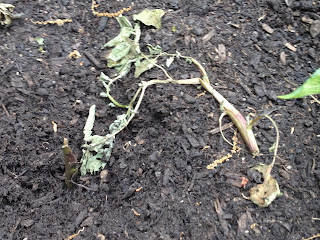
Last weekend I transplanted three tomatillo plants to the garden. They were looking really good: big, strong plants ready to take off out in the sunshine. Here's what we have left: Only the one on the right remains, and that one has been damaged pretty severely. The culprit? Cutworms. Their tell-tale destruction looks like this: Cutworms are the larvae of various moths. They overwinter in soil, and in the spring evenings they feed on the stems of new garden plants. They basically shear off the stem, eating a little bit near the ground and leaving the rest of the plant to die. I think I hate them most because they are so wasteful. At least a groundhog or  turkey has the decency to enjoy the whole vegetable . Some quick internet research revealed that there is such a thing as a turnip cutworm, and since we had turnips in this bed previously, I'm guessing that this is our particular pest. I noticed that some of the carrots we overwintered in this bed were ch...

Of Cabbages and Cutworms

Image
Although we were very good about fencing the cabbages this year to protect them from hungry skunks and groundhogs, it turns out something else has been eating away at them: See the way those leaves are clipped off right at the bottom? At first I wasn't sure what was going on, because of the insect damage further up the leaf, but that nibbling at the bottom is a classic sign of cutworms. We have dealt with them before , and there's just nothing more disheartening than watching your tiny transplants (especially ones you raised from seed over the winter) get mowed down overnight.  Half of our winter cabbages were beyond saving:  As you can see, I suspected cutworms earlier, and used a yogurt cup with the bottom cut out as a ring around it to keep the worms at bay. That was too little, too late for this plant, though. Time to try a more drastic remedy before we lose all of the cabbages. First, we dug up our remaining plants and temporarily moved them to an un...

Predator Protection Trial and Error

Image
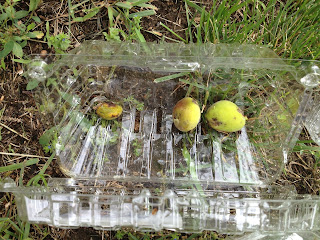
This spring we tried a few new things to keep our crops safe from animals and insects that would like to swipe more than their fair share. One promising idea was using plastic fruit containers to keep squirrels away from our ripening tree fruits. But after all of our blustery days of downpours this month, most of those containers ended up on the ground: I wouldn't mind just snapping them back in place, but the real problem is that they often brought the fruit down with them. I'm not sure if this is a flaw in the system overall, or more of an issue with apricots being kind of delicate in hanging on the tree (at least, this has been true for us — it's not the first time we've accidentally knocked one off the branch before it was ripe).  Alas, the only one we have left on the tree is this one that never made it into a container in the first place. I thought about removing the remaining containers last weekend, but decided to ride out the experiment instea...

Battlefield: Cutworm

Image
Ugh. These bastards: Earlier this spring we had problems with cutworms in our tomatillos. Now we have discovered that they are in the tomatoes and leeks as well. We lost a couple of our tomato transplants, so I got busy making more collars. We quickly ran out of the toilet paper and paper towel rolls we held onto after the tomatillo issues , so I grabbed the only cardboard-y thing we had lying around the house: Manila file folders. And you know what? They're  perfect  for this job. Here's what you do: Cut the folder in half down the center (on the existing fold). Then cut your paper-sized piece of folder in thirds the short way. This is a piece of cake to eyeball if you use folders with tabs that are 1/3 the length of the folder (as you can see above). Next, roll it up and staple it together. Three times is just right. Make a bunch. It goes pretty fast, even if your kids won't help you out (ahem). Apply to your vulnerable plants. T...

Battle Royale: Potato Beetles vs. Lady Bugs

Image
Something’s eating our potato plants: At first Kirk assumed it was cutworms because the stems looked sheared off, but we also have a whole bunch of these guys: That’s a pair of Colorado potato beetles , working pretty frantically to make lots more little potato beetles.  These bugs are notoriously destructive, and we’re losing potato plants by the day: I’m not sure if they’ll sprout again or not, but even if they do, I doubt we’ll have much of a yield by fall, especially given our short growing season. These are our red and white potatoes, but our blue ones are in a different bed — one that so far seems to be in the clear. This weekend we’ll add some row covers to the blue potato bed to try to keep it that way. We suspect that these potato beetles rode in on a load of compost from the city yard. This is ordinarily an excellent resource, but we’ve never had a problem before, and we were fine right up until adding city compost to hill up these plants....

And Now, Flea Beetles

Image
Some of the time you would say it was luck, and some of the time you would say it was weather , but this season has been really hard on the garden in the insect department. In addition to the usual trouble with cutworms and cabbage loopers , we also have a bunch of asparagus beetles ruining that crop.   And now there are also flea beetles : That little black bug in the center is a small beets that can hop around, and we have more than just one. you can see that there’s tons of damage on that arugula leaf it’s sitting on, and every arugula plant in our mesclun patch looks the same way. They also really like radishes, so I don’t think we’ll be getting any of those to plump up any time soon.  We can live without arugula and radishes, but these bugs have also gotten into our broccoli and cauliflower, though the damage for the most part isn’t quite as severe: Since radishes are their favorite food, I planted several small patches in the broccoli and caulif...

Trim the Fat Tuesday: The Yogurt

Image
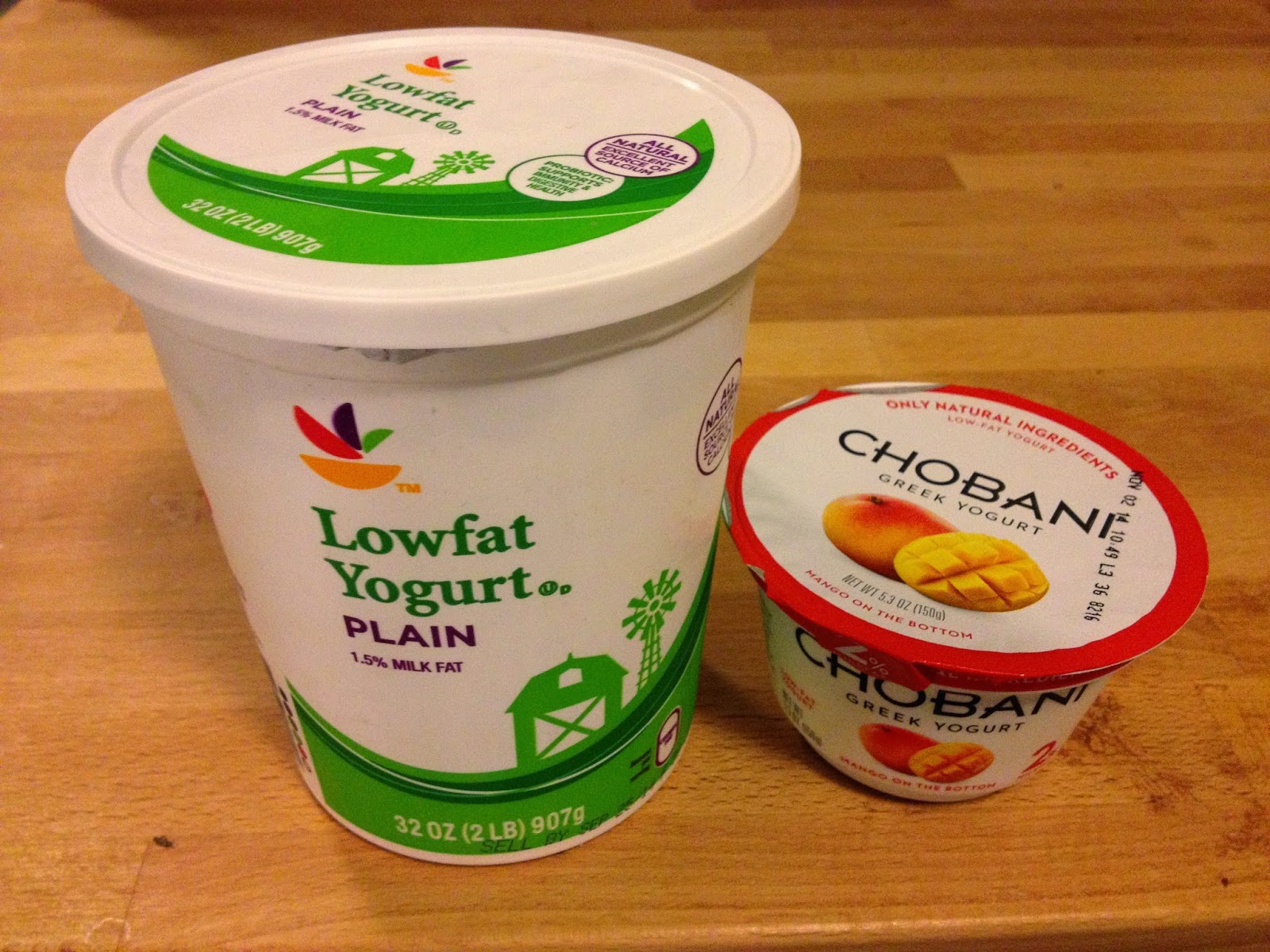
To continue this month's look at the grocery list , we decided to make a small adjustment to one of our common snacks. From now on we will Replace individual yogurt cups with a quart of plain yogurt. With four people eating lunches away from home, we tend to pack a lot of yogurt to take along with us. After all, it's a healthy snack that can cure a craving for something sweet, and it's super-convenient to toss into a lunch box. Sounds great, but there's a but. All those little cups are more expensive than buying a big tub of yogurt, and of course there's more plastic involved in individual containers. We recycle them (or use them in the garden to keep cutworms at bay ), but it still strikes me as more wasteful than is strictly necessary. Getting a big container of plain yogurt is more versatile, because we can use it in cooking (think marinades and raita, for starters). And while it's nice to pick out fun flavors of yogurt, the pre-made kind use...

Galling Insects

Image
I'm not sure why (though I think our cool, wet spring may play a role), but this year we've been hit with a whole lotta bugs out in the garden. There was, of course, the plague of cutworms  and the rose slug scourge . There are also currently an absolute shit-ton of aphids on my chamomile , which has never happened before. That's not affecting the crop of flowers, although it is making picking them kind of disgusting, as I end up with squished aphids under my fingernails as I pinch off the blossoms. Luckily, several ladybugs have moved in to take care of them, so hopefully my next round of harvesting won't be so gross. Strangest of all, though, is what we found on our Concord grapes: Kirk's knee-jerk diagnosis was that we were facing an alien invasion, and that I should not bring the leaf inside the house ("That's just what they want you to do!"). I rolled my eyes, took my chances, and hit the internet. Based on actual facts and not scie...

Celery and Parsley Results

Image
This year, for the first time, we started celery and parsley from seed . That was back in February. Here's where we are today: Looking good, right?  Alas, I cannot take credit for the sudden lush growth of our celery and parsley seedlings. These are all transplants that we had to go out and buy to replace our pitiful ones. So what happened? Well, for starters, celery and parsley are notoriously difficult to start from seed. We managed a quick germination, but from there on it was very, very slow growth. They were still super-tiny in April , and died shortly after I planted them outside in early May. I'm not exactly sure what happened. We've been dealing with cutworms big-time this month, so that's a possibility. We also had some critter issues this spring. Fletch dispatched with a couple rabbits, and Kirk took out a groundhog with a lucky throw of a baseball bat (there's actually more to it than that, but I'm going to spare you there Gam...