Posts

Showing posts with the label cranberries

2016 Master Plan: The Workshop Quadrant

Image
Another section of the garden plan for spring is the quadrant near the workshop and chicken coop: The right-hand bed of this section is under a small maple tree, which we keep around because it shades the chickens nicely in the summer. It definitely limits our options in that bed, though — no full sun to be had. We've found that salad greens (spinach, arugula, mesclun lettuces, beet greens) started in a cold frame do well here, since they get sun until the tree leafs out in May. If they're reasonably sized, the shade then works to our advantage to keep them from bolting. Weedy cilantro and dill also do well here, so we amend with lots of compost and just have the herbs and greens switch places each year, and it seems to work well. Along the top are still perennial grapes and herbs, which will remain in place (give or take a few small shake-ups of the herb garden that I'm mulling over). On the left at the top is a section for potatoes, though we'll als...
The Cranberry Harvest

Image
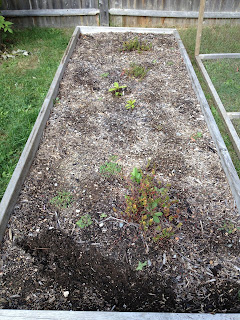
Back in April, a soil test revealed that the beds where we planted our cranberries and blueberries are nowhere near acidic enough for those plants to thrive. We replaced the sadder of our two cranberry beds with strawberries, but kept one around, since we had nothing better to put in it this season. As you can see, it's still pretty pathetic, despite adding some sulfur: Given that we planted these cranberries years ago, they should be filling the bed by now. Because the pH of the soil is too high, however, the cranberries can't access the nutrients they need. That means they're growing very  slowly. Here's the whole crop for the year, from three plants:  To be fair, they do look nice. It's just that 40 square feet of planting area has yielded us only 25 berries: By any accounting method, that's not a very good use of space. Should we hang onto the plants anyway and keep plugging away at making the soil more acidic, or should we give up ...

Soil Testing

Image
Last weekend when we planted our potatoes , we decided that we would expand our potato plot into the strawberry bed, which we made room for by emptying a very sad cranberry bed of its pathetic plants: To make sure that we wouldn't just be killing strawberries in that bed the way we killed those cranberries, we grabbed a soil test kit at our local feed store (yes, that's a thing ): In all our years of gardening, we've never once bothered with a soil test. I guess we've just gotten lucky with good soil, and all our compost use paid off. So this was fun.  You fill up to the first line of the plastic test tube with soil from a depth of 4 inches. Then you empty that little capsule of powder into the tube. Add water, shake it up, and let it settle: Then you compare the color of the water to the chart on the package. This is very alkaline, which explains why the cranberries never thrived. They need really acidic soil, so they were never able t...

A New Potato Hilling System

Image
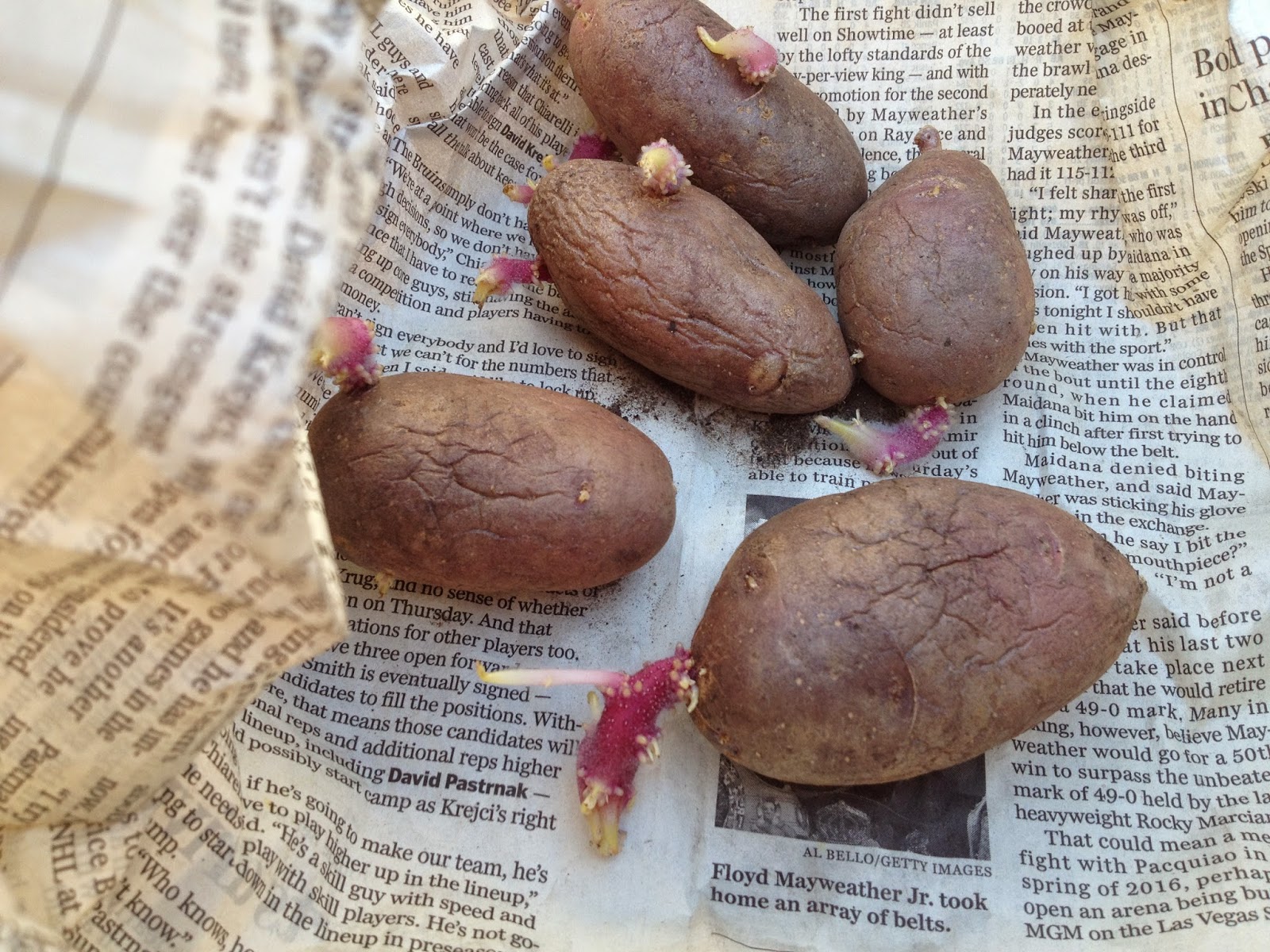
Our seed potatoes arrived from Johnny's on Friday — just in time to plant them this weekend. We are planting Kennebecs and Adirondak Reds that we bought, plus our own purple seed potatoes that we saved from last year's harvest: This year we decided to try something new for hilling up the potatoes. In the past we used 2-foot square potato boxes that we gradually built the sides up on as we hilled up the plants. This was never all that successful. The idea is that the plants should keep producing tubers up their stems and they are covered, but we never really got many potatoes above the original soil line. So this year, we'll being hilling the plants in a more traditional way by just heaping some extra compost around each one. To keep the extra dirt from spilling into the paths, we used parts from the old potato boxes to build a wooden wall: We also have way more seed potatoes than we could fit in that space, so we decide to add an extra potato bed whe...

Perennial Update

Image
Although most of our garden is devoted to growing annual vegetables, we do have several beds set aside for some perennials that come back every year. It's nice to have some (mostly) worry-free crops that just do their thing without much attention: Just add a compost top-dressing in the spring and enjoy the bounty. Here's how our perennial fruits and veggies are faring this year.  Our strawberry patch is three quarters of the way planted. The Tribute strawberries in the foreground were our first plants, and they are now in their third season. The lush patch in the middle are last year's Honeoye planting, and the dark compost section in the background marks our newly planted Seascape strawberries.  I have to say, I'm not that impressed with the Tribute strawberries. Their flavor can be kind of tart for straight eating, and the plants have not bounced back from this winter very well. In another couple years it will be time to replace them, and we will probabl...

Peachy Cranberry Christmas Tart

Image
Remember our tiny cranberry harvest? Back in October , this was the full extent of what we picked: According to the news , 2013 was an absolute bumper year for the Massachusetts cranberry harvest. While that may be true, our own cranberry plot is only a couple years old, so we don't have much to show for it just yet. Like blueberries , cranberries take several years to get established, so we should be pleased with our small handful (1/3 cup, to be exact) that has come in ahead of schedule. But what do you do with only 1/3 cup of cranberries? That's definitely a garnish-only amount, but we like to make sure that we celebrate each crop we harvest by making something special out of it (at least with the first picking — 7 zillion tomatoes later doesn't feel quite so special by late September).  So after some time spent flipping through cookbooks, I happened upon a Martha Stewart recipe for a peach tart with cranberry glaze. The original recipe calls for 1 cup...

Frost Advisory, Forced Harvest

Image
Last night we had a frost advisory, and while my gut reaction to it was that the air felt a smidge too humid for us to worry about it, we finished covering our greenhouse tunnels in plastic anyway. We also brought in the last of our summer fruits, just in case. Here's our forced harvest: A whole lotta green tomatoes. We are hoping for two pies out of these, plus some to fry up. (Still looking for a great recipe for fried green tomatoes, by the way. Our only previous attempt was less than exciting. If you have a great recipe, please comment.) We also have a row of tomatoes on the window sill that were starting to turn red, and they can continue to ripen indoors. We should have tomatoes that way for another couple of weeks, I think. We also brought in all of our butternut squash and our ripe pumpkins, although we left three on the vine but blanketed in row cover fabric while they continue to ripen from green to orange. This is by far the best we've ever done wit...

Small Fruit Sunday

Image
Yesterday we planned to plant our newly arrived blueberry bushes in the beds we had prepared for them last fall . To our surprise, when we opened the package it wasn't just blueberries, but all of the small fruits we had ordered from Miller Nurseries . This turned our relaxing, light day in the garden into a pretty busy one — and a windy one at that. The weather the past three nights has dipped to just above freezing (so we continue to water and cover plants each evening just in case — a total pain), and during the day it has been sunny but incredibly windy. Not that much fun to be out in, but we had a lot to get into the ground. Before the planting even happened, though, Kirk replaced our broken fence sections . Those had been down for a year and a half, and we finally have managed to be good neighbors and get them fixed. They look all nice and new now (which looks a little strange in comparison to the old sections surrounding it), but it should weather into the same sil...

Plotting the Perennials: The Berry Beds

Image
Today, after a month or so hiatus from gardening, we broke out all of our graph paper, catalogues, and reference books to begin planning for the 2012 garden:  We already had four giant (1 square = 6 inches of planting area) graphs drawn out and ready to go from last summer — one graph for each quadrant of the garden. That was pretty overwhelming, so we started with the easiest thing: planning the berry beds that are off to the side. Back in October we built them, filled them with dirt, and added sulfur to acidify the beds that will be for blueberries and cranberries. This is what they look like today, in their finished state: To the left is the raspberry bed. Down the center of this 22-foot long bed will be 8 plantings of raspberries: three  Latham (a red, midsummer raspberry), three  Fall Red (an everbearer from UNH that will produce in summer and again throughout the fall), one  Allen (a black raspberry), and one  Bristol (another black r...