Posts

Showing posts with the label cucumbers

Bunny and Toad

Image
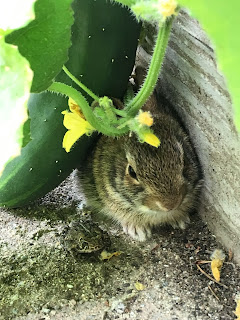
Yesterday while Kirk was mowing the lawn , he accidentally flushed out a couple of creatures who jumped out the way to escape certain doom from the blades of the very loud machine. Kirk turned off the mower and took a peek under the cucumber vines. It wasn’t one, but two little animals getting out of the way. This baby bunny is very young. Last weekend it was still in its nest, which Kirk partially dug by accident while dealing with a weedy portion of the garden.  We have seen a couple rabbits in the yard all summer, and they’ve nibbled a few items — notably the beet tops. Mostly, though, they have only been interested in the big patch of clover growing on this year's fallow sections of garden. Since we no longer have an outdoor cat to take care of critters, this is a great way to peacefully coexist. We’ll probably plant a decoy clover section on some portion of the garden every year, especially now that we’re content to do slightly less intensive growing. Anyway,...
2018 Master Plan: The Swingset Quadrant

Image
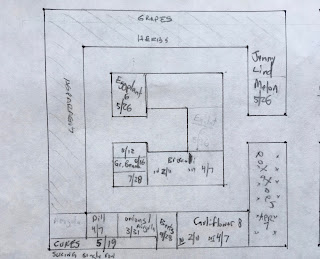
Continuing around the garden to the swingset quadrant, we have our planting plan for the 2018 season: On the left, as always, is the asparagus . It’s not nearly as productive as it once was, so this spring we will try renovating it by resetting the crowns lower in the earth and adding some lime to counteract the soil acidity from a nearby evergreen tree.  Across the top are perennial grapes and herbs — nothing to see there.  Along the right side is space for Jenny Lind melons, which is a new variety of small, green fleshed melons. This is an heirloom variety popular among the Pennsylvania Dutch, and we got the seeds on a trip to the Landis Valley Village and Farm Museum last spring. There’s also a potato patch. Along the bottom is a very small length of trellised cucumbers, which will be for slicing. We have tons of pickles from last summer, so we won’t be planting any pickling cukes at all. There’s also an assortment of dill, arugula, beets and cauliflo...

2017 Master Plan: The Driveway Quadrant

Image
It’s that time of year again! We’ve been a little slower than usual to get the garden plan done this winter, as we’ve been driven to distraction by current events . Still, we finally finished that work today, and leek and onion seeds have already been started. Here’s hoping that the spring will bring the goodness and light of things growing and being nurtured in your corner of the world, too. Starting in the center C, you can see dots that indicate the spots where PVC pipes will be inserted for pole beans. We’re doing the bean house again here! Around the outside is a traditional companion planting of squash and pumpkins.  Across the top of the top bed is a long row of trellises cucumbers, both pickling and slicing. We’re going all in on these this year, since last summer’s drought left us with just one  cucumber for the whole season. Behind the cucumbers will be bell peppers, hot peppers, eggplant, head lettuce, and a few succession plantings of cilantro. ...

Make the Garden Great Again

Image
Insects aren't   our only problem  this season: we’ve also got some border enforcement issues: All of our butternut squash (above) has been nibbled on, as have our pumpkins and black beans (below): While these aren’t completely destroyed, the same can’t be said for our green beans: Also coming under heavy fire: sweet potatoes, cucumbers, Brussels sprouts, and lettuces — all of which are in the quadrants farthest from the house. We’ve seen a groundhog around as well as a skunk, and both are good suspects. The damage is all pretty dainty, though, and some of it was done by scurrying under a very small gap beneath the temporary (and ineffective) chicken daycare cage . We’re thinking rabbits running bold, thanks to a barn cat who is rather timid about hanging out in plain sight in the yard during the day (though he has left plenty of evidence of mice and bird kills — and is coming a little closer to us every day, so we remain hopeful). Anyway, it’s tim...

2016 Master Plan: The Swingset Quadrant

Image
Continuing with the garden plans for the spring, here is the swingset quadrant diagram: The full left side is the perennial asparagus bed, so no changes there. Ditto for the top, which is still grapes in the back and perennial herbs in the front. I may end up moving around some of the herbs once they come up in the spring and I see what's there. Anyway, the upper portion of the right side is mostly head lettuce, which will be shaded by a trellis of pickling cucumbers (on the long side) and slicing cucumbers (on the short side). The shade should help keep the lettuces from bolting in the summer heat, especially since the trellises are oriented to block out afternoon sun. The lower half has pole beans along the right side, which will vine their way up poles that arch over the center path. We did this in the past closer to the house, and it worked well to form a shady arbor to support all the beans — like the bean house , but over the path instead. The rest of the bed i...

Tomato Apple Chutney

Image
This weekend, as always, we had a lot of picking to do. Our harvest is spreading across several tables and counters now. From the orchard we have lots of apples and pears: And from the kitchen garden we have an assortment of other (technical) fruits, including tomatoes, bell peppers. cucumbers, zucchini, and eggplant: The past two years we made and canned a delicious peach and zucchini chutney at the height of summer to preserve those outsized harvests. It's one of my all-time favorite foods, and I love it with some cheese, crackers, and pickles for a winter lunch.  This year we will not have any, so when our last jars are gone, we'll be out of that particular chutney for a few years, until a new peach tree begins to bear .  So we went back to the drawing board to find a new chutney recipe with ingredients that we actually have. Mid-September tomatoes and apples? Check. The Ball Book has a tomato apple chutney recipe , as does River Cottage . ...

Making French Cornichons

Image
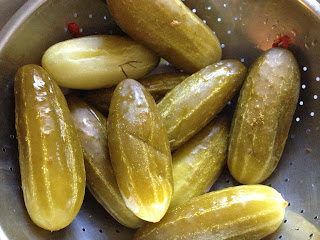
When we have made enough sweet gherkins  for the year, it's time to switch to sour little cornichons:  These are far less involved than the gherkins because they're a refrigerator pickle. This recipe lasts pretty well forever (unless you lose power for several days and have to dump the contents of fridge, I guess). French cornichons are small and sour and totally delicious with cheese and other charcuterie-type delights.  The only tricky part about making them is remembering to pick the cucumbers when they're still tiny — the size of your pinkie finger is ideal. In the quart jar I have above, some are more the size I would use for gherkins. For whatever reason, all the really tiny ones are facing the wall in this photo.  Anyway, I think I've perfected my cornichon recipe, so give it a try if you're up to your ears in cucumbers: It's a great way to slow down your yields for a week or two since you won't have to harvest giant cukes later. ...

Endings

Image
November always strikes me as the end of something. The World Series is over and baseball is done for the year, despite my best efforts to hang on to summer. Halloween and its accompanying burst of creativity is past. Daylight Saving Time has finally ended, thrusting us headlong into the dark days. Temperatures have dipped below freezing, ending the active growing season and leaving us casting about for something to do in the garden besides peeking under the tunnels and raking up leaves. Although we haven't technically had a frost, we did have some snow yesterday, so our remaining summer fruits are dead and gone. This was our last harvest basket: Tonight we ate the very last fresh tomato (in salsa form). There are no more cucumbers, and the supply of peppers and jalapeños is dwindling. We still have some eggplant, but Saturday's eggplant parm luncheon had some bitter bites, and we had so much of it this year that I think we might just compost the last few on the c...

One Last Batch of Pickles

Image
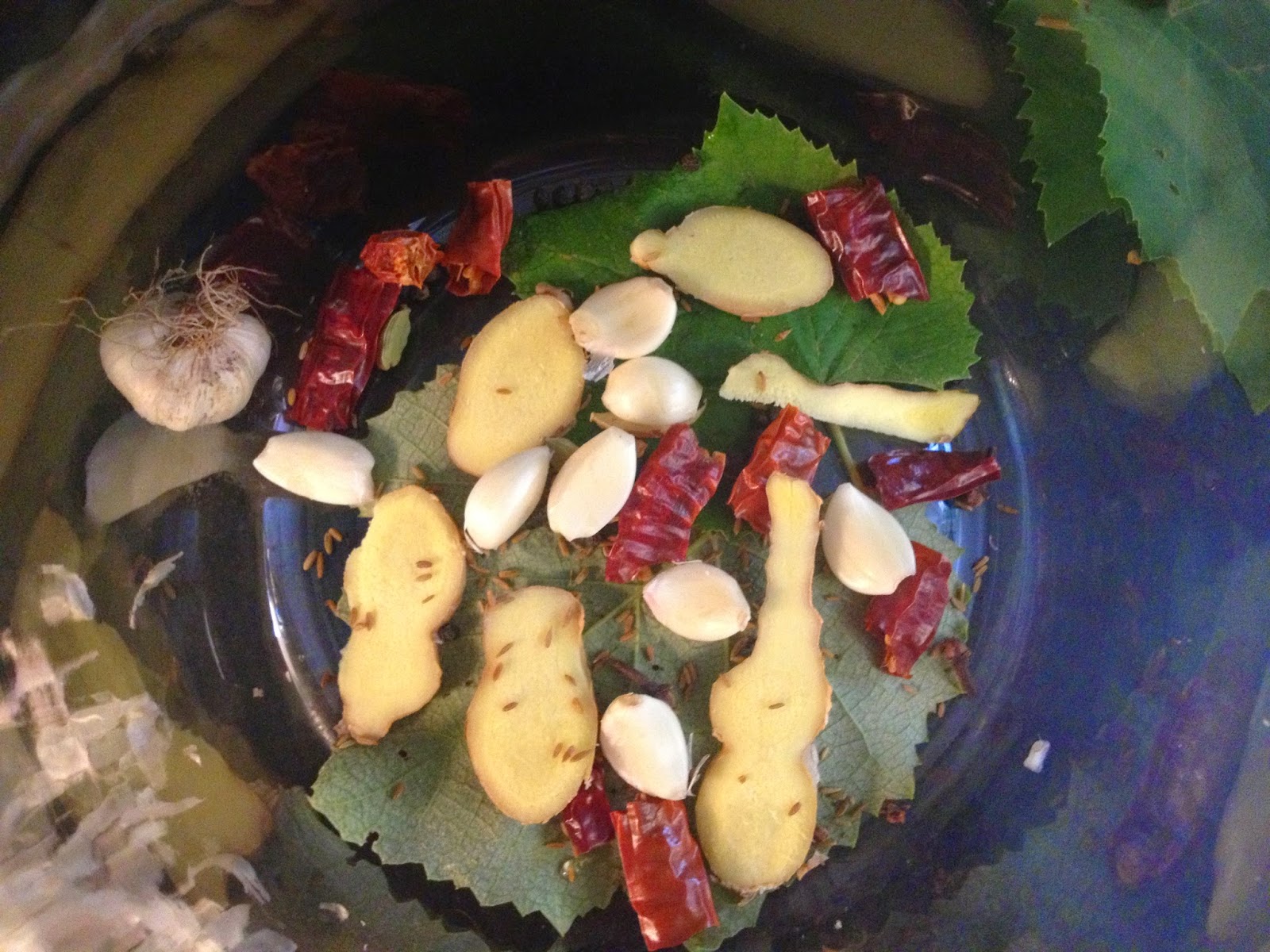
This year I missed almost all of pickle-making season while I was in Costa Rica ; Kirk took over all pickling duties while I was away. Now that it is September, we are not sorry to see the cucumber vines die back, as we completely overestimated our cucumber needs this year. Before we rip them out, though, we made one last pass to gather all the pickling cukes of gherkin -size or greater.  This last pickle contains no dill, since our dill went to seed before we could get another patch up and growing for fall. That's just as well, since all of our other pickles are made with dill (as you would expect). With that flavor off the table, I went with ginger (because we had it) and some Indian spices for a completely different flavor. They should taste similar to the Curry Sour refrigerator pickles I've made in the past, except that these will be fully fermented and canned. Ginger Garlic Pickles 3 pounds of small pickling cucumbers 2-4 fresh grape leaves 2 heads of...

Late Summer Lessons

Image
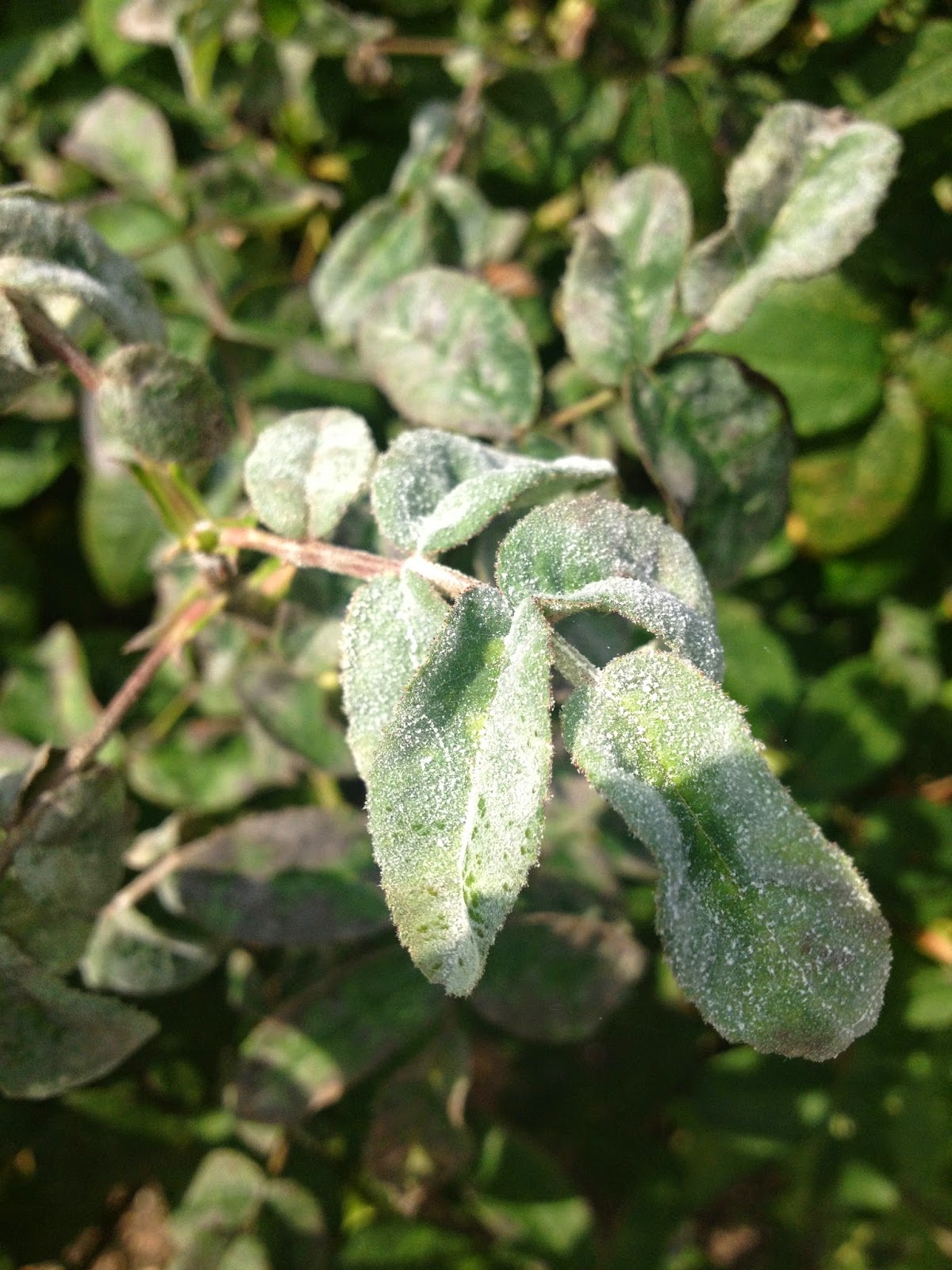
I took my last summertime tour of the garden today, pulling weeds, harvesting veggies, and surveying what we accomplished this year. It is the end of August, and while we of course have many fine days ahead of us, the nightime chill is already a reminder that our beautiful New England summers are also fleeting. There's a lot to be proud of, but no matter how long we've been at this gardening thing, there's still a lot to be learned. This year, there are three planting lessons that are obvious to us only now, a good four months after the mistakes were made. Gardening is a long game. Lesson #1: Don't plant pumpkins near roses. It never occurred to me that this could be a problem, but it has been. The last half of August has been quite dry, and powdery mildew has overtaken our pumpkin vines (ditto for the squash, zucchini, and cucumbers). Having the pumpkin vining around the rose bushes has also led to their infection with powdery mildew in recent days, as yo...

Cooking, Costa Rican Style

Image
After sampling several versions of local rice and bean dishes during our beach weekend here in Costa Rica, we went shopping for ingredients to do our own cooking when we got back to Turrialba, the town where we are living and going to school. Between our own palates and the information I got from my Spanish teacher Heyni, we were ready to make our own version of a traditional gallo pinto .  Gallo pinto means "spotted rooster," but really it's the name of typical mix of beans and rice and spices. This is usually served with eggs for breakfast, but we decided to have it with some chicken for dinner. Here are our ingredients: Clockwise from the top, first we have salsa de vegetales  (also, for reasons unknown, called  salsa inglesa ),   which is a local condiment used mostly on bean and rice dishes. It's a non-spicy, savory mix of onion, carrot, cucumber, cauliflower, garlic, pepper, and cumin. We grabbed the cheap version, but the standard is appare...

What's Cooking, Kids?

Image
In yesterday's Boston Globe (online, at least) there was a piece about bringing back Home Ec courses in schools. Apparently, "kids these days" don't know how to do anything important any more, and all the practical skills have been pushed out of schools because they aren't tested.  Part of me thinks, "Yes! Home Ec and Shop are totally important life skills." Also, I want to be the curriculum writer and teacher of that subject because it would be a blast and I would make it so awesome. The other part of me thinks, "No! How much more can you possibly expect a school to accomplish? Can't parents teach their kids anything any more without outsourcing it to already-overburdened schools?" And a third part of me thinks, "Who cares? My kids are well on their way to self-sufficiency. They clean their rooms, do their own laundry, care for the animals, and help with daily kitchen clean up."  Best of all, they are also lear...

Gazpacho Dorado

Image
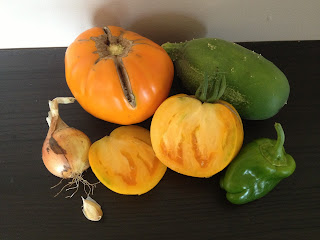
In addition to all the regular red tomatoes we've grown in the past, this year we planted an heirloom Ukrainian yellow variety, the seeds of which we picked up at Strawbery Banke last fall . Although they took a while to fruit, they ended up being delicious — meaty, and not as acidic as tomatoes are apt to be. I think of it as a great tomato for people who think they don't like tomatoes. (Although I cannot personally understand such an aversion, I hear that it does indeed exist among some small, sad portion of the population.) They are also gorgeous: Most of our red tomatoes get sauced or salsa'd , so I thought I'd use some of the yellow ones for gazpacho to save the red for those other uses. Also involved are an onion, a clove of garlic, a small slicing cucumber, and a small green pepper. This is a traditional Spanish-type of gazpacho , meaning it is pureed and has bread, and is not a cucumber-y mild salsa (though those are nice, too). Since this one...

Road Food

Image
We're making our way down the shore for the holiday weekend, and I have packed a lot of garden road food for the trip: Roughly clockwise from the top, we have cherry tomatoes, cantaloupe slices, strawberries and a few early-ripening grapes, green beans and carrots, peaches and apples, a box of salsa, and more green beans.  Also, I made sandwiches for the road — we're not a picket-line crossing kind of family (it's Labor Day weekend, y'all), so road food is going to be homemade today: Cucumber and dill sandwiches and caprese sandwiches with Ukrainian yellow tomatoes. And plain butter bread for Jonas, who inexplicably does not like sandwiches. But with all the snacks above, we should be in good shape!

Brined Pickles: A Follow-Up Report

Image
It occurs to me that I never wrote about how our brined kosher dills turned out. Since I started those back in mid-July, we have made a bunch more fermented pickles. First, a look at how the original batch turned out: This is what they look like after three weeks of fermenting in the crock. I pulled them out of the crock and gave them a quick rinse, then strained the brine into a pot to boil it.  (Now, I know that boiling it kills all the good bacteria from the fermentation process, making this no longer a "living food" and blah blah blah . But we don't have enough room in our refrigerator for 10 gallons of pickles chilling in their living brine. Gotta can them, and that means boiling it all up. It doesn't really change the flavor, which is my main purpose here.) Anyway, after boiling the strained brine, you pack the pickles in hot jars, pour the brine over them, and process in a boiling water bath canner for 15 minutes.  As you can see, t...

Scenes From a Summer Harvest

Image
You know how traditionally women did certain household chores on certain days? Like washing on Mondays, ironing on Tuesdays? If you think I'm making this up , you didn't read enough Little House in the Big Woods as a kid. Well, I kind of have that this summer. Harvest on Mondays and Thursdays, deal with said harvest on Tuesdays and Fridays.  So after yesterday's picking over of the garden and orchard, here's what I had: Another twenty or thirty pounds of peaches, plus all our red and yellow onions on the counter behind them. Here's a better view. The bags are full of drying herbs and last year's mustard seeds, which I still haven't completely threshed out yet because it's a giant pain. The onions are easy — they just need to sit out in the warm air to cure before we store them in the basement.  A refill on the fruit bowl, now with nectarines in addition to peaches. (Oh, and one windfallen-but-perfectly-ripe Gala apple t...