Posts

Late Summer Lessons

Image
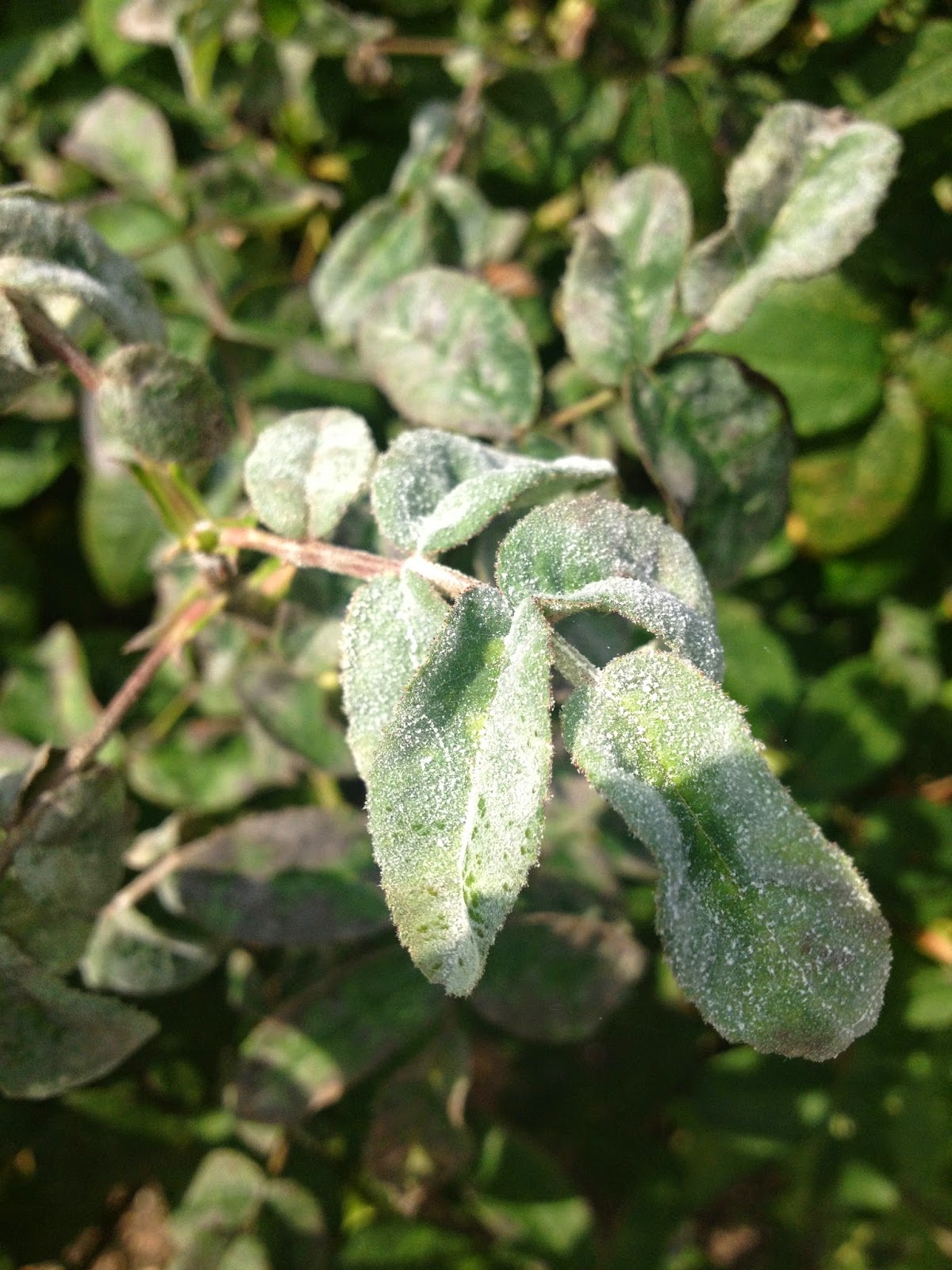
I took my last summertime tour of the garden today, pulling weeds, harvesting veggies, and surveying what we accomplished this year. It is the end of August, and while we of course have many fine days ahead of us, the nightime chill is already a reminder that our beautiful New England summers are also fleeting. There's a lot to be proud of, but no matter how long we've been at this gardening thing, there's still a lot to be learned. This year, there are three planting lessons that are obvious to us only now, a good four months after the mistakes were made. Gardening is a long game. Lesson #1: Don't plant pumpkins near roses. It never occurred to me that this could be a problem, but it has been. The last half of August has been quite dry, and powdery mildew has overtaken our pumpkin vines (ditto for the squash, zucchini, and cucumbers). Having the pumpkin vining around the rose bushes has also led to their infection with powdery mildew in recent days, as yo...
Trim the Fat Tuesday: The Car Taxes

Image
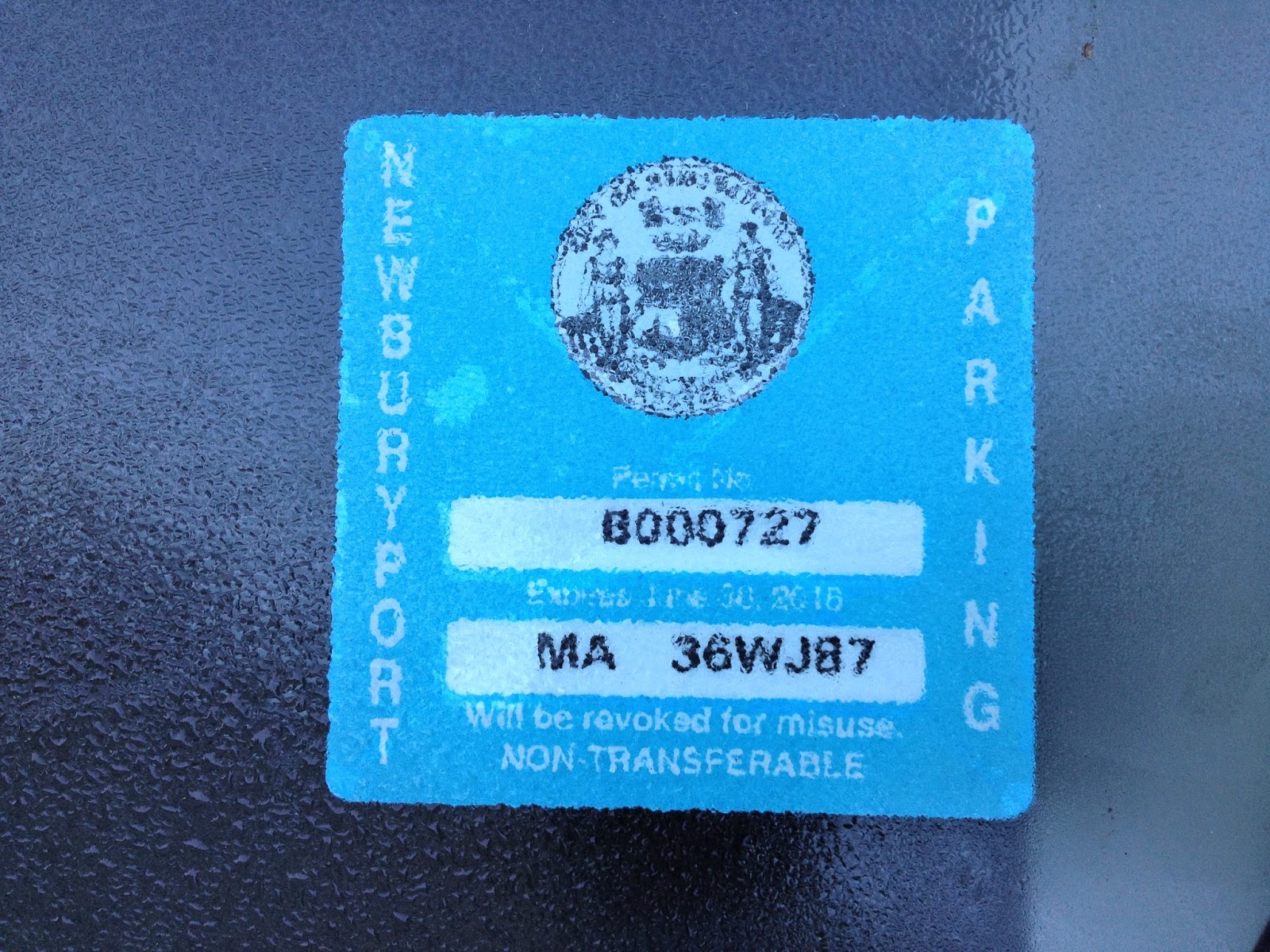
As I mentioned last week , we are in the process of becoming, once again, a one-car family. There are lots of savings to be wrung from this one simple (albeit somewhat demanding) act, including Cutting out one car's worth of annual taxes and fees. In Massachusetts, we are charged an excise tax on each car. It's based on the value of the car, and bottoms out a $30 a year once your car is old and not worth much any more (which has been the case with the Focus for as long as I can remember). Get rid of the car, and you don't have to pay the excise tax anymore. The other fee we incur with each car is the  resident parking sticker for the Newburyport lots. It's not much at all — at just $10 every two years, it's a actually a great deal. Still, one less car means one less parking sticker, so there you go. The annual total of car taxes and fees that we now can skip is $35, which is just under $3 of savings per month. I'm going to round up, as usual. It...

Achiote and Anona

Image
While sorting through some photos from Costa Rica, I realized I never shared the last interesting tidbits from our trip to the Bribrí cacao farm  on the Caribbean coast. Before we got into the nitty-gritty of making chocolate, we toured the farm to check out some of the other useful plants that grow there.  First, our guide Priscilla picked a ripe achiote  and broke it open to show us the seeds inside: In English this is known as annatto. When the achiote  skin is leathery and brown, it means that the seeds inside are ready to use. The bright red seeds can be dried and crushed to make a reddish-orange spice that is used in many Mexican and Central America recipes. Priscilla explained that the Bribrí people also used it for painting their skin bright red, for keeping cuts clean, and for soothing a sunburn. Tiegan was happy to give that last use a try, as she had just the day before gotten the worst sunburn of her life: I bought some ground achiote...

Kids' Corner: Spiced Peaches

Image
Every summer Miss Katherine would pick bushels of peaches and preserve them in jars with cinnamon, cloves, nutmeg, and other spices which she kept secret. The jarred peaches would last all winter. They probably would have lasted a lot longer than that, but they were always eaten by the end of winter. ~ from Holes , by Louis Sachar It's been a long time since our last Kids' Corner , because it turns out our kids are pretty busy with playing piano and baseball and school and theater and karate and friends. But here we are with today's featured author, Jonas Trach: Jonas is a ten-year-old boy who will be starting fifth grade in September. He likes to show off his karate skills, sometimes in the cloud forests of Costa Rica. Below is his account of making spiced peaches, which were inspired by Miss Katherine's prize-winning spiced peaches in the book Holes , by Louis Sachar.  (He asked us about making these months ago, and now that the peaches are in, we cou...

Cherry Bounce, Part 2

Image
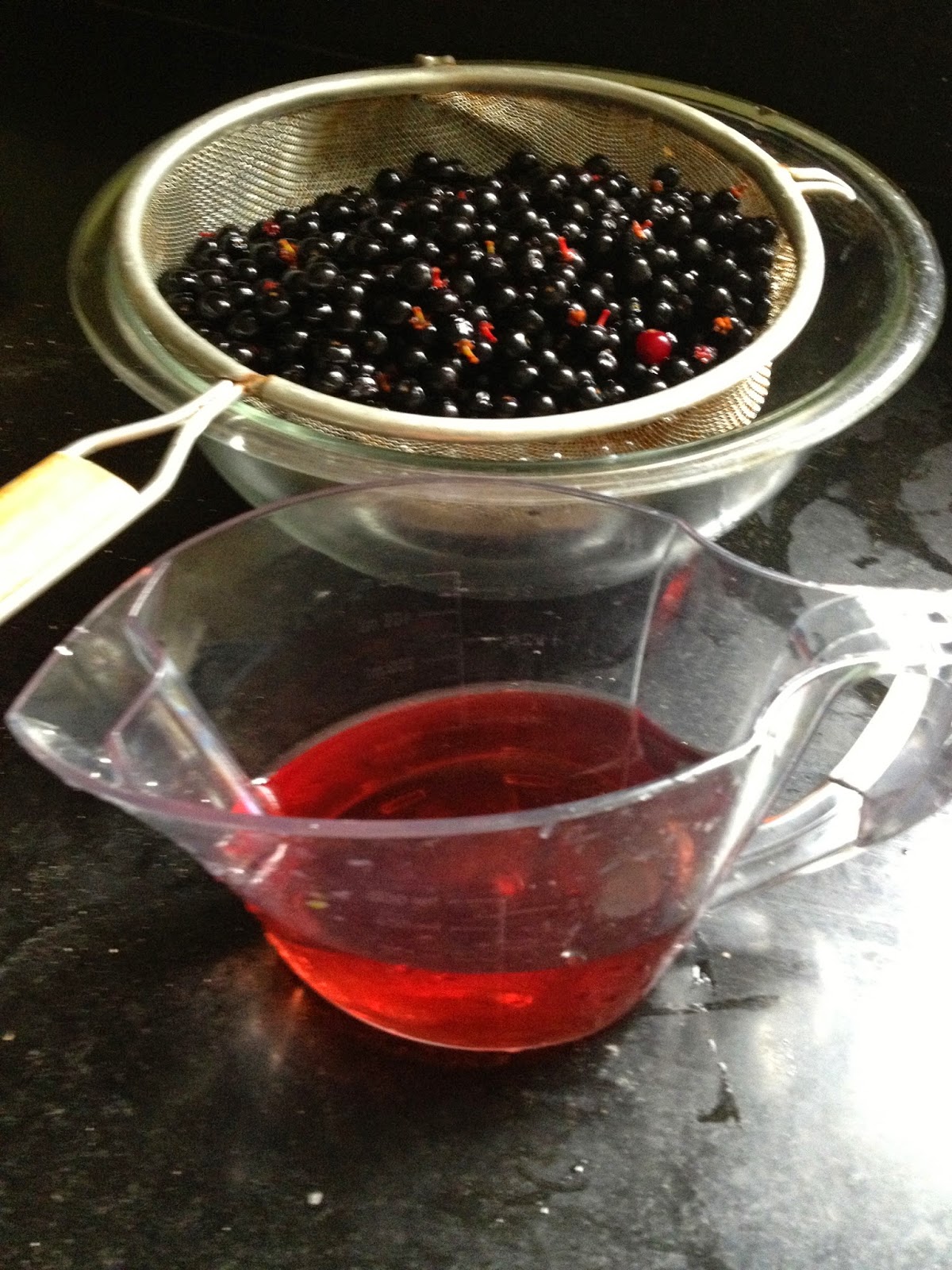
Yesterday I started making Cherry Bounce by soaking our foraged chokecherries in water overnight. Now that they are done soaking, it's time to finish mixing up our ingredients for this colonial-era cordial. We're ready to move on. Step three: Drain the chokecherries, reserving 1 cup of the soaking liquid: As you can see, what was plain water yesterday is now a lovely cherry red color. It doesn't taste like much of anything yet, but it sure is pretty. Step four: Add the reserved liquid plus 2 cups of sugar to the chokecherries: Because we are in the height of pickling season, I didn't have an available container large enough for a quart of chokecherries plus a quart of rum and all that sugar. Instead, I used four wide-mouth, quart-sized mason jars, which meant I had to further divide down the recipe to have tiny proportions of the ingredients. This is a really easy way to do it, though, and is perfect if you only have a small amount of fruit or ju...

Cherry Bounce, Part 1

Image
Do you have one of these in or near your yard? If you have lots of little purple berries getting squished underfoot on your sidewalk or driveway, or are hearing lots of birds squabbling in the early morning, look up. You might notice some of these:  This is a chokecherry tree, a native cherry tree with small, tart fruit. (Tart is probably an understatement,  or at least is only accurate when they are very ripe, as the ones in the picture are. ) Some people call them pin cherries or bird cherries.  These trees are kind of weedy, and we have several. One is a bushy monster near the fire hydrant out front, and the several more are taller and more obviously tree-like, but are technically on the neighbor's property along the line our driveways share. But lots of the long, willowy branches hang over the fence onto our side of the driveway, and that's good news for us, since you can use these guys to make a traditional colonial cordial called Cherry Bounce. ...

Trim the Fat Tuesday: The Car Registration

Image
Big news! By the end of September, our trusty Ford Focus will no longer be with us. Once upon a time, we got a great deal on this car (used) when we were in a pinch (thanks, Rockingham Toyota !). That was back when it was only five or six years old, and when it was shiny and had just 17,000 miles on it.  Fast forward to today: The car is now a somewhat ornery adolescent about to reach its fifteenth birthday, and it has just over 140,000 miles on it. It's running well and looks pretty good (if you don't look at the children's crumb-filled back seat), but that's thanks to us keeping up with the maintenance.  Getting rid of this car allows us to, among other things, Eliminate the registration renewal fee for the second car. This car's registration expires at the end of September, and we will not be renewing it. We will also not be replacing the car, thanks to Kirk's new job in town. Instead of driving a half hour to Lawrence every day for ...